High Wear-Resistant Bucket Teeth for John Deere Dozers | Get Quote

Get a Free Quote

Our representative will contact you soon.
Email
Name
Company Name
Message
0/1000
Wear-resistant Excavator Bucket Teeth — The Right Assistant for Efficient Operation

Wear-resistant Excavator Bucket Teeth — The Right Assistant for Efficient Operation

Excavator bucket teeth are the key components that directly contact with materials in excavation operation, and their quality directly affects the construction efficiency and cost.Our excavator bucket teeth are made of high chromium alloy, which is made by precision casting and special heat treatment. Its hardness is above HRC60, and its wear resistance is far higher than that of ordinary bucket teeth. Whether it's digging hard soil, gravel, ore, or dealing with construction waste, this bucket tooth can easily cope with it.The sharp tooth shape design makes it easier to enter the soil and reduces the energy consumption of the equipment; the thickened tooth tip enhances the impact resistance and avoids breakage.At the same time, we provide a variety of models and specifications, suitable for Carter, Komatsu, Sany, Xugong and other mainstream brands of excavators, from micro-excavators to large-scale mining equipment can be accurately matched. Choosing our bucket teeth can not only pro
Get A Quote

Advantages of bucket teeth

Super wear-resistant material, longer use

Forged with high-chromium cast iron alloy, the hardness of the tooth tip reaches HRC65, which is more than 50% higher than that of ordinary bucket teeth. When digging hard strata such as granite and concrete blocks, the tooth tip is not easy to crack and wear slowly, and its service life can reach more than 300 hours under normal operation, thus reducing the trouble of frequent replacement.

Scientific tooth profile design, labor-saving and efficient

The design of the tooth profile optimized by fluid mechanics reduces the resistance to penetration by 20% compared with the traditional bucket teeth. When digging hard soil, a shovel goes down more smoothly, which can not only save the fuel consumption of excavators, but also increase the amount of work per hour. Especially in the large-scale site leveling operation, the efficiency improvement is particularly obvious.

Full model coverage, strong adaptability

Whether it is a 1-ton mini excavator or a 100-ton large mining excavator, we have a corresponding bucket tooth model. Covering 98% of the mainstream brands such as Carter, Komatsu, Volvo, and Xu gong, the installation holes are precise, and the old bucket teeth can be replaced directly without additional processing and polishing.

Good impact resistance, not easy to break

The tooth root is thickened and the arc transition design is adopted, which can disperse the impact force during excavation. Even if they accidentally dig underground stones, steel bars and other hard objects, it is not easy to break the tooth root. It is used in complex working conditions such as mining and demolition, and its stability is far superior to that of ordinary bucket teeth.

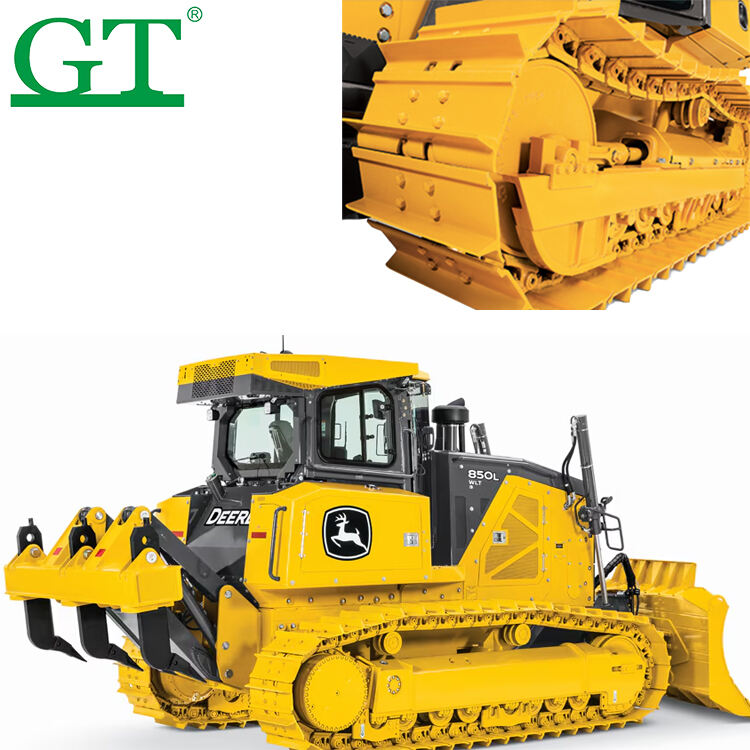
Spare Parts For John Deere Dozers

Operation steps for replacement of # excavator bucket teeth
Step 1: Prepare tools and new bucket teeth
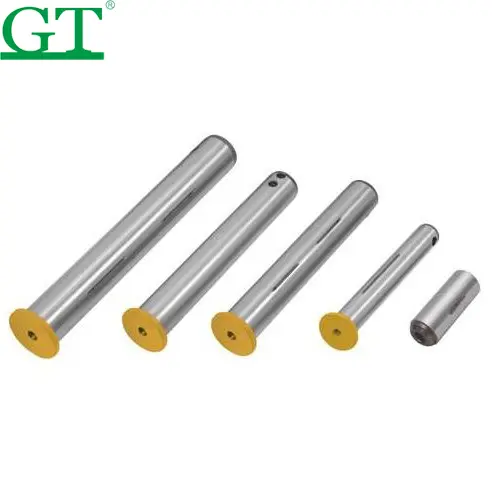
Prepare the new bucket tooth, matching bucket tooth pin, hammer, wrench and grease gun.Check whether the model of the new bucket tooth matches the excavator, and confirm that the bucket tooth pin, cotter pin and other accessories are complete, so as to avoid midway shutdown.
Step 2: Remove the old bucket teeth
Start the excavator, put the bucket on a stable ground and turn off the engine to ensure safety.Use a wrench to remove the cotter pin of the old bucket tooth, and then use a hammer to gently knock the bucket tooth pin to remove it from the pin hole, and then remove the worn old bucket tooth.If the bucket tooth pin is rusty and difficult to remove, it can be soaked in a small amount of lubricating oil for a few minutes.
Step 3: Clean the installation position
Use a brush or rag to clean the dirt, rust and debris at the bucket connection to ensure that the pin hole is unobstructed.Check whether the connection part is deformed. If it is slightly worn, it can be simply polished to ensure that the new bucket teeth can be installed smoothly.
Step 4: Install new bucket teeth
Align the new bucket tooth to the installation position of the bucket, insert the bucket tooth pin, and hit it with a hammer until it is completely in place.Apply a proper amount of butter on both ends of the pin to reduce the wear during use. Finally, install the cotter pin and bend it to prevent the bucket tooth pin from falling off.
Step 5: Check the installation effect
After installation, shake the bucket teeth by hand to confirm that there is no looseness.Start the excavator, carry out several simple excavation actions, observe whether the bucket teeth are stable, ensure that there is no abnormal sound or shaking, and then can be put into operation normally.
FAQ

Which type of bucket teeth should be selected for different working conditions?

It mainly depends on the operating environment. For excavation of soft soil and clay, long and sharp bucket teeth shall be selected to make the excavation smoother; for excavation of gravel and ore, short and thick bucket teeth shall be selected to make the tooth tip thick and impact-resistant; it is recommended to use wear-resistant reinforced bucket teeth at the demolition site to cope with the wear of steel bars and concrete blocks. If you are not sure, tell us about your job scenario and we can recommend the most suitable model.
Most of them are not quality problems. It may be that the bucket tooth pin is not installed in place, or the cotter pin is not tight, or the pin hole of the old bucket is worn out. When installing, remember to knock the bucket tooth pin to the end, and the opening angle of the split pin is more than 90 degrees. If the pin hole is worn, it is recommended to replace the bucket tooth pin with a new one, so that it is not easy to loosen.
Under normal operation, it can take 3-6 months to dig ordinary earthwork and 1-3 months to dig hard rock or ore, depending on the working conditions.All bucket teeth are provided with a 3-month warranty. During the warranty period, if there is any fracture or chipping caused by non-collision, a new one will be issued free of charge, and the return freight will be borne by us. # # Q: Can imported excavators use your bucket teeth?
Look at two places: one is that the tooth tip is worn more than 1/3 of the original length, at this time, it will become more difficult to bury, and the fuel consumption will increase; the other is that the tooth root has cracks, even if it is a very small seam, it must be replaced to avoid sudden breakage and falling down during operation. It is recommended to check it every time during maintenance, so as not to affect the work when it is completely worn out.

Our Company

OEM vs Aftermarket Undercarriage Parts for Excavators and Dozers: Which Is Better?

11

Jul

OEM vs Aftermarket Undercarriage Parts for Excavators and Dozers: Which Is Better?

View More
Common Causes of Undercarriage Wear in Excavators and Dozers—and How to Prevent Them

11

Jul

Common Causes of Undercarriage Wear in Excavators and Dozers—and How to Prevent Them

View More
Top 10 Signs Your Track Chain or Sprocket Needs Replacement

11

Jul

Top 10 Signs Your Track Chain or Sprocket Needs Replacement

View More
Why Choosing Quality Undercarriage Parts Boosts Equipment Longevity

11

Jul

Why Choosing Quality Undercarriage Parts Boosts Equipment Longevity

View More

What Our Clients Are Saying

John
John

We have tried several brands of bucket teeth, but these are by far the most durable.Our diggers dig through concrete and hard clay every day, and these teeth last 50% longer than our previous teeth.The sharp design also makes digging easier-our crews finish an hour early on most days.

Anna
Anna

Mining limestone is difficult for equipment, but these bucket teeth are impressive. We used to change our teeth every two weeks, but now we change them every three to four weeks. No cracks, no chips, just consistent performance. They also fit our Volvo excavators perfectly.

Raj
Raj

Our mini excavators can handle everything from field leveling to irrigation ditch digging.These teeth are sharp enough for soft soil, but tough enough for hidden rocks.We've had them for three months and they still look almost new.Much better than the local option we used before.

Hiroshi
Hiroshi

Road repairs mean digging through asphalt, gravel and debris-hard work for any bucket tooth. They stay sharp longer and the fit on our Komatsu machine is precise with no wobble. Since the replacement, we have reduced the replacement time by 60%.Very reliable.

Get a Free Quote

Our representative will contact you soon.
Email
Name
Company Name
Message
0/1000
Why Choose Us

Why Choose Us

The high chromium alloy cast iron is forged at 1200 ℃, and the hardness of the tooth tip reaches HRC62-65, far exceeding the average HRC55 standard of the industry. Under high-intensity working conditions such as mines and gravel yards, the single service life can reach 1.6 times that of ordinary bucket teeth, and the shutdown loss caused by frequent replacement can be reduced. Manganese is added to the tooth root to enhance the toughness, improve the impact resistance by 40%, and avoid the problem of cracking during hard rock operation.
WhatsApp WhatsApp E-mail E-mail YouTube YouTube FaceBook FaceBook Linkedin Linkedin
email goToTop