Когда гидравлика цилиндр цилиндр иштебей калганда, проблема аздаа гана цилиндрдин өзүнөн келип чыгат.
Экскаваторлор, жүктөрчүлөр, бульдозерлер жана казуу машиналары үчүн гидравликалык цилиндр оор жүктөр, үзгүлтүс талаа, чопо, титрөө жана жогорку гидравликалык басым сыяктуу эң катуу шарттарда иштейт.
Көпчүлүк операторлор цилиндрди тек гидравликалык майдын сыртка агып чыгышы же күчтүн жоголушу учурунда гана байкашат. Бирок иштебей калуунун чыныгы себеби көбүнчө ички износ, тыгыздаштырмалардын бузулушу, жаман бет иштетүү же компоненттердин туура эмес сайланышынан башталат.
Гидравликалык цилиндрлердин неге иштебей калышын жана надёждуу алмаштыруу буюму тандаш үчүн, цилиндрдин ичине караш жана анын ар бир бөлүгүнүн бирге иштешин түшүнүү маанилүү.
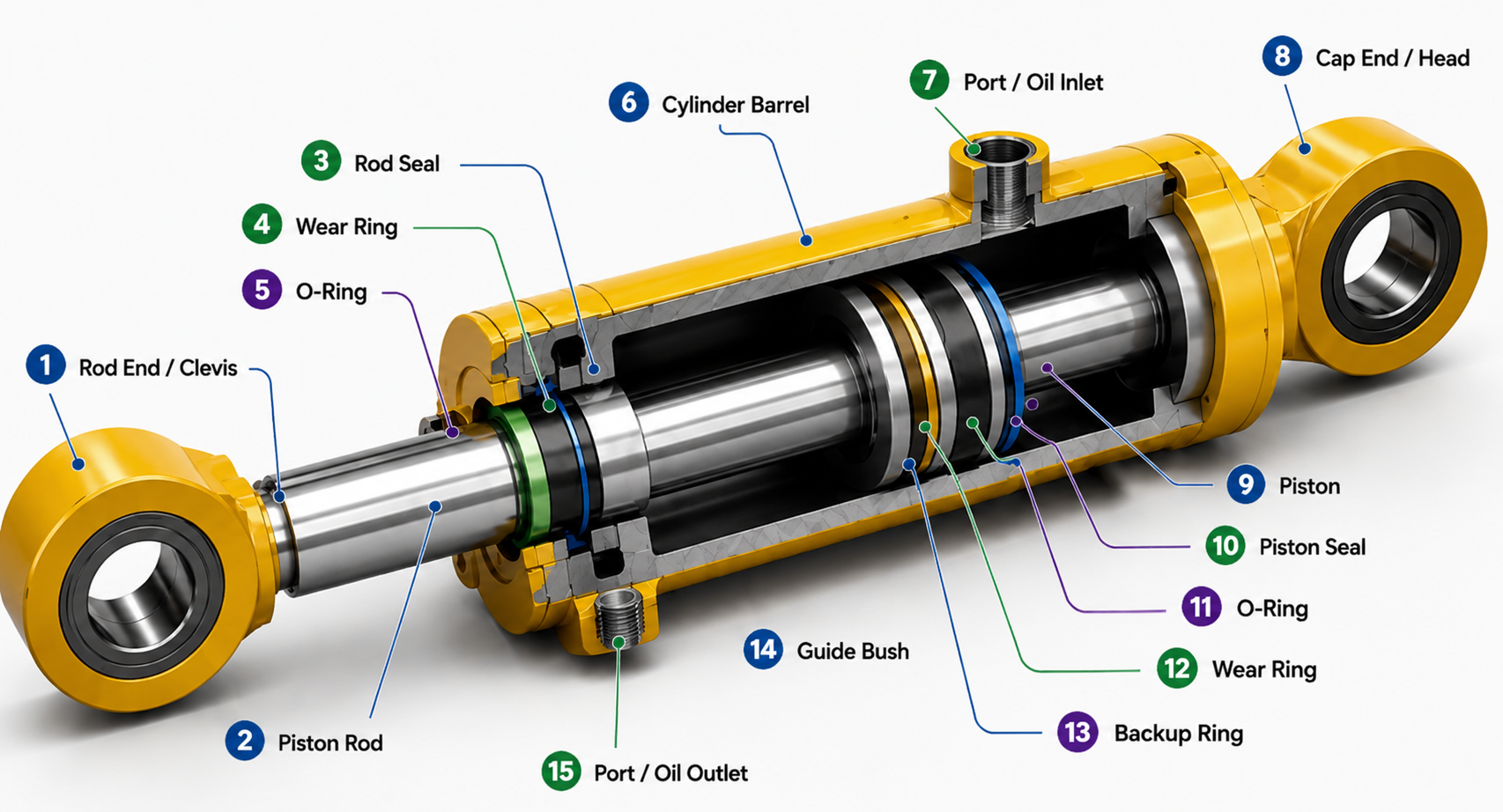
Тышынан караганда, гидравликалык цилиндр жөнөкөй көрүнөт: цилиндрдик корпус, стержень жана орнотуу чекиттери.
Бирок ичинде бирге иштеген көп санда прецизиондук бөлүктөр бар:
Ар бир компонент өзүнчө ролду аткарат. Бир тармакта кичинекей кылган көйгөй бүтүн цилиндрдин иштешин таасирлей алат.
Поршень чубугу туурасынан иштеш орчунга таянып турат.
Эскаватордун иштеш колу ар бир жолу жылганда, чубук чыгып жана кирет, агылжылган жүктөрдү ташып, тозолорго, балчыкка жана нымга таянып турат.
Сапты поршень чубугу төмөндөгүлөрдү талап кылат:
Чубуктун бетинин жасалышы айрыкча маанилүү. Аз гана царапа поршень түрмөгүн зыяндаган жана акыркысында гидравлика майынын агып кетишине алып келет.
Бул ойдон көпчүлүк цилиндрлердин бузулушу гидравликалык системанын өзүнөн эмес, стерженьдин бетинен башталат.
Цилиндрдик баштам – негизги басымдын камеры.
Гидравликалык май порт аркылуу кирет жана поршонду цилиндрдик баштам ичинде түртүп, сызыктык кыймыл тудурат.
Баштамдын ички бети поршон жана тыгыздаштыруу деталдары туруктуу ичинде кыймылдаганы үчүн чоңдукта жакшы тегиз болушу керек.
Иштетүүдө талап кылынган беттин сапасын камсыз кылуу үчүн так хонингдөө сыяктуу ыкмалар колдонулат.
Төмөн сапаттагы баштам сырттан нормалдык көрүнүшү мүмкүн, бирок жүздөгөн иштөө сааттарынан кийин көйгөйлөр тудурат.
Тыгыздаштыруу деталдары гидравликалык цилиндрдин ичиндеги эң кичине компоненттери болуп саналат, бирок алардын иштөө сапатына таасири чоң.
Тыгыздаштыруу системасы адатта төмөндөгүлөрдү камтыйт:
Алардын иштөөсү — бул тек гана майдын агып кетишин токтотуу эмес.
Алар гидравликалык басымды сактоого, цилиндрге ластыкчылыктын кирүүсүнө жол бербөөгө жана машина эффективдүү иштөөсүн камсыз кылууга да жардам берет.
Чындыкта иштөө шарттарында тыгыздаштырмалардын сапаты көпчүлүк учурда цилиндрдин кандай узактыкка чейин туруктуу иштеп, кийинче техникалык кызмат көрсөтүү талап кылынат дегенди аныктайт.
Гидравликалык цилиндрлер иштөөдө көпчүлүк учурда жанынан таасир этүүчү күчтөргө учурайт.
Мисалы, экскаватор күчтү айрыкча түз сызык боюнча түзүлбөгөн. Цилиндр жылганда кошумча күчтүн таасирине туруштук бере алат.
Сызыктык ылдамдыкты туташтыруучу ооруктар жана баракчалар поршен, шток жана цилиндрдеги тескери орнотулушту сактоого жардам берет.
Туура баракчалоо жок болсо, металл бөлүктөр бири-бири менен тийишет, анда төмөндөгүлөр пайда болот:
Бул бөлүктөр сырттан көрүнбөсө да, узак мөөнөткө сенимдүүлүккө маанилүү ролдун аткарат.
Гидравликалык цилиндр өзү гана иштебейт.
Ал төмөндөгүлөр менен бирге иштейт:
Цилиндрде ички сүзүлүү же жаман тыгыздаштыруу болгондо, машина төмөндөгүдөй кыйынчылыктарга дуушар болот:
Курал-жабдык иштетүүчүлөрү жана бөлүштүрүүчүлөрү үчүн туура гидравликалык цилиндрди тандоо — бул жөнөкөй сатып алуу баасында эмес. Бул кийинки убакытта тутунуу чыгымдарын төмөндөтүүдө.
Сенгилдик гидравликалык цилиндрди жасоо процессинин бардык этаптарында көңүл буруу талап кылынат.
Маанилүү адымдарга төмөндөгүлөр кирет:
Материалдарды тандоо
Иштөө шарттарына ылайык туура болгон болот материалдарды тандоо.
Ишлеу даярлыгы
Ар бир компоненттин өлчөмдүк талаптарын толуктогузуу.
Бетинин даярдалышы
Сызатуу каршылыгын жана коррозияга каршы коргоону жакшыртуу.
Туура тыгыздаштыруу
Ар түрлүү колдонулуштар үчүн туура болгон тыгыздаштыруу системаларын тандоо.
Басын тастоо
Жеткізүүдөн мурун иштешүү сапасын текшерүү.
Айналган бардык этаптар цилиндрдин акыркы иштешүү мөөртүнө таасир этет.
Гидравликалык цилиндр жөнөкөй компонент сыяктуу көрүнсө да, анын ичинде так иштетүү, материалдардын технологиясы жана тыгыздаштыруу инженериясы бар.
Курилыш, казылуу жана жерди көчүрүү үчүн колдонулган агыр техникада цилиндрдин надеждуулугу машинасынын иштешүү убактысына тууралуу таасир этет.
Ички структурасын түшүнүү сатып алуучуларга жакшыраак чечим кабыл алууга жардам берет — алар гана алмаштыруу бөлүгүн тандабашат, бирок техниканы узак убакыт иштетүүгө мүмкүндүк берген чечимди тандайт.


 EN
EN