Tráthnóna nuair a siúlach hidreacail nuair a theipeann an róndán, is beag an dóigh go bhfuil an fhadhb sa róndán féin amháin.
D’fhreastalaíonn róndán hidrilic ar mhaisíní trom mar shampla eiseactóirí, lódáirí, doithréadóirí, agus maisíní mianach faoi na dtíortha is deireanaí — lucht trom, tiontú leanúnach, salann, crochadh, agus brú hidrilic ard.
Nótaíonn go leor oibrí an róndán ach amháin nuair a bhíonn imscrúdú oiléin nó caillteanas cumhachta ann. Ach is minic a thosaíonn an fhadhb iomlán roimhe seo, ó chaitheamh istigh, damáiste ar shiolláin, tréimhsiú droch-chaileachta ar an dromchla, nó comhoiriúnú mícheart ar pháirtí.
Chun tuiscint a fháil ar chúis theipeanna róndáin hidrilic agus conas rogha ionadaigh oiriúnach a dhéanamh, tá sé tábhachtach an róndán a sheiceáil istigh agus tuiscint a fháil ar an gcaoi a n-oibríonn gach páirt le chéile.
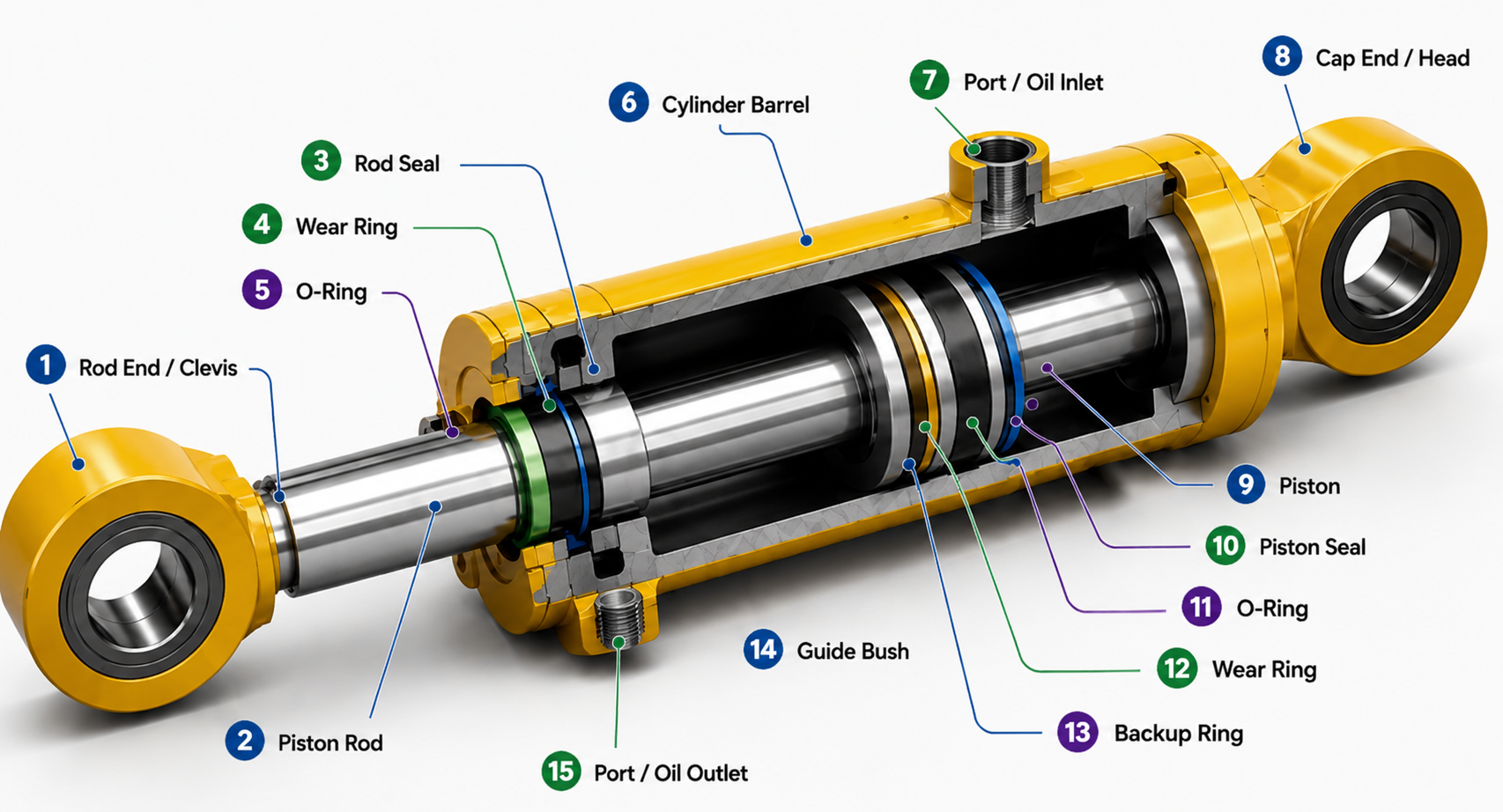
Ón taobh amuigh, tá an róndán hidrilic simplí: barrall, rod, agus pointí ceangailte.
Taobh istigh, áfach, tá go leor comhpháirtí cruinne ag obair le chéile:
Tá ról sonrach ag gach comhpháirt. Is féidir fadhb bheag i gceann amháin a thagairt ar pherformance an tsilindir iomlán.
Tá an ród pistón le feiceáil go díreach sa chomhaireacht oibre.
Gach uair a ghluaiseann an lámh an t-ullmhúcháin, téann an ród amach agus isteach, ag tógáil lucht trom agus ag bheith le feiceáil i ndóthain, i mbuaille agus i bhfliuchtaí.
Bíonn ród pistón cáilithe de ghnáth ag teastáil:
Tá an cruaithiú uaireanta ar an ród an-tábhachtach. Fiú scraith bheag is féidir léi seal an róid a mhilleadh agus i dtreo caillteanais ola hidráilic.
Seo a fheicimis gur thosaigh go leor mítheangaimh silindir ó dhromchla an róid seachas ó an córas hidráilic féin.
Is é an barrall na gcilindir an príomhchamra bhrú.
Isteann ola hidrálach trí an gceannaire agus bualann an pistón isteach sa bharrall, ag cruthú gluaiseacht líneach.
Ní mór an uirlis inmheánach den bharrall a bheith an-chloiche go forleathan toisc go n-imeoidh an pistón agus na sealanna go leanúnach istigh ann.
Le linn na monaraithe, úsáidtear próisis ar nós honing cruinne chun an críochnú uirlise a bhaint amach.
D’fhéadfadh barrall de cháil íseal a bheith cosúil leis an gceart ón taobh amuigh ach d’fhéadfadh sé fadhbanna a chruthú tar éis céad nó cúpla céad uair ó obair.
Is iad na sealanna roinnt de na comhpháirtí is lú laistigh den chilindir hidrálach, ach tá tionchar mór acu ar an bperformans.
Bíonn an córas sealála de ghnáth ina bhfoilsiú mar seo:
Níor féidir a gcuid oibre a shainiú ach amháin mar a stopann siad rith na hola.
Cabhrann siad freisin le bheith ag coimeád brú hidrilic, le cur in aghaidh загрязнения a isteach sa chilindar, agus le coimeád an mhaisín ag obair go héifeachtach.
I ndáil na fírinne, minic a chinntíonn cháilíocht an tseal conas faoi fhadtír is féidir le cilindar oibriú sula gcaithfear a úsáid ar dtús.
Is minic a bhíonn lucht taobh ar chilindirí hidrilice le linn oibriú.
Mar shampla, ní thagann an t-ullmhaíochtaí ar aon chorraí go dtí an treo ceart. Caithfidh an cilindar an t-isteach breise a áireamh agus é ag bogadh.
Cabhrann fáinneanna ullmhaithe agus buiséidí treoraithe le coimeád an phost, an róda agus an bharraile i mbunaithe.
Gan treoraithe oiriúnacha, d’fhéadfadh comhpháirteanna meitile a bheith i dteagmháil lena chéile, agus mar sin a bheith ag cur i bhfeidhm ar:
Ní féidir na codanna seo a fheiceáil ón taobh amuigh, ach tá siad tar éis páirt tábhachtach a imirt ar shábháil fadtíre.
Ní oibríonn rúinne hidrálach gan a bheith ina chuid den chóras.
Oibríonn sé le:
Nuair a bhíonn imscrúdú istigh nó caighdeán olc sealaithe ann, d’fhéadfadh an t-inneall a bheith ag:
Dona úinéirí inneall agus na himreoirí páirtí, is é roghnú an rúinne hidrálach ceart níos mó ná an prís a íoc. Is é an t-aidhm ná costais reparaigh amach anseo a laghdú.
Teastaíonn aird ar an gceannas ar an gcéim iomlán de phróiseáil an rúitín hidrálach.
Céimeanna tábhachtacha ina measc:
Roghainn Mhaterail
Rogha na mbailte stáin oiriúnacha de réir na dtíortha oibre.
Níos mícheart faoi faireacht
A chinntiú go bhfuil gach comhpháirt ag fulfillt na riachtanais tomhas.
Lámhach an uirthi
Foilsiú an t-ádh le haghaidh slisne agus cosc ar chorráid.
Maitheas an tsealainn
Rogha córais sealainn oiriúnacha do gach feidhmchlár.
Tástáil Spré
Seiceáil an fhreastalaíocht roimh an seoladh.
Tá gach céim ag tiontú ar an saol seirbhíse deiridh an rúitín.
B’fhéidir go bhfuil rúitín hidrálach mar dhuine simplí, ach taobh istigh is comhábhar de mheaisínithe cruinn, teicneolaíocht ábhair, agus innealtóireacht sealainn é.
Doníonn cruinneas na gcylindirí díreach ar an am a bhíonn an t-ainmhiú ag obair do thionscadail, dona mianach agus do chórais bogadh talún.
Cabhríonn tuiscint ar an struchtúr istigh le ceannaitheoirí cinntí níos fearr a dhéanamh — neart a roghnú codán ionadaithe ach freisin roghnú réiteach a chuireann an t-ainmhiú ag obair ar feadh níos faide.


 EN
EN