The Revolutionary Value of Track Rubber Plates: Redefining the Performance Boundaries and Economic Ecology of Construction Machinery
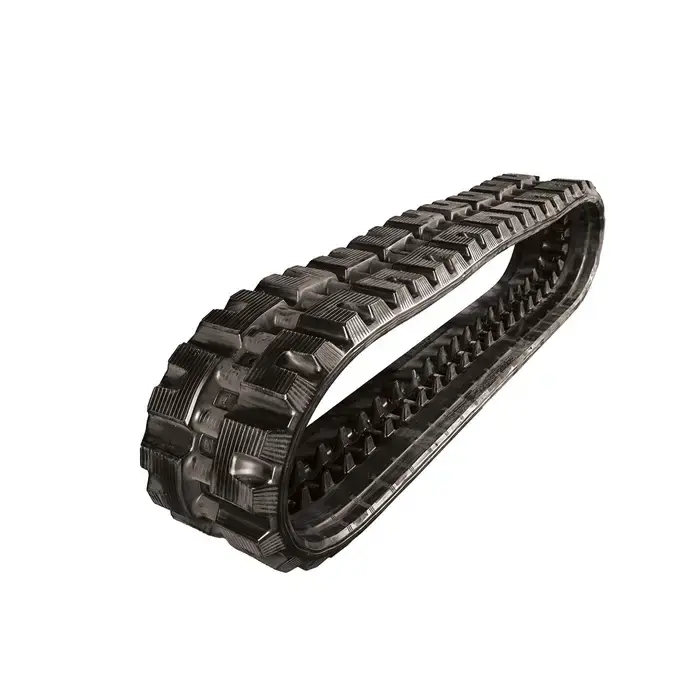
In modern construction, agriculture, and landscaping operations, track rubber plates have evolved from basic consumables to strategic upgrade solutions. Compared to traditional steel tracks, these high-performance synthetic track plates address three major industry pain points through structural innovation: ground damage, overall costs, and multi-functional adaptability. Their wide contact area distributes equipment pressure by up to 80%, enabling a “trace-free working mode”—concrete surfaces no longer develop rutting cracks, golf course turf remains intact, farmland avoids soil compaction, and indoor renovation projects can proceed safely. This zero-damage characteristic for sensitive sites directly translates into enhanced competitiveness and reputational assets for engineering companies.
From an economic perspective, threefold cost optimization is driving industry innovation: premium rubber compounds resist oil corrosion and mechanical wear, with a lifespan 2-3 times longer than steel tracks; eliminating chain track pin maintenance and tension adjustment reduces maintenance costs by 40%; lightweight design combined with low friction characteristics reduces fuel consumption by 15%. For construction machinery operating continuously daily, these changes mean annual operating costs per unit can be reduced by tens of thousands of dollars.
The upgraded operating experience also challenges traditional perceptions. The rubber layer acts as a natural shock absorber, enabling compact loaders to move smoothly at speeds of 6 km/h, significantly reducing driver fatigue. The special tread design maintains 90% traction on icy slopes at -25°C and reduces operating noise by 12 decibels compared to steel belts, perfectly meeting the stringent requirements of urban nighttime construction. These features enable a single machine to load and unload building materials on hard surfaces in the morning, move to lawn construction in the afternoon, and enter greenhouse operations in the evening, achieving “one machine for all” complex working conditions.
In current mainstream engineering scenarios, the ROI of rubber tracks has fully surpassed steel solutions. When contractors face the industry paradox of “needing to complete heavy-duty operations while ensuring the integrity of the client's site,” this is not only a technical alternative but also the key to unlocking new business dimensions—from municipal pipeline renovations to ecological farm construction, projects that were once deemed too risky due to equipment limitations are now emerging as new profit growth opportunities.
 EN
EN