 EN
EN


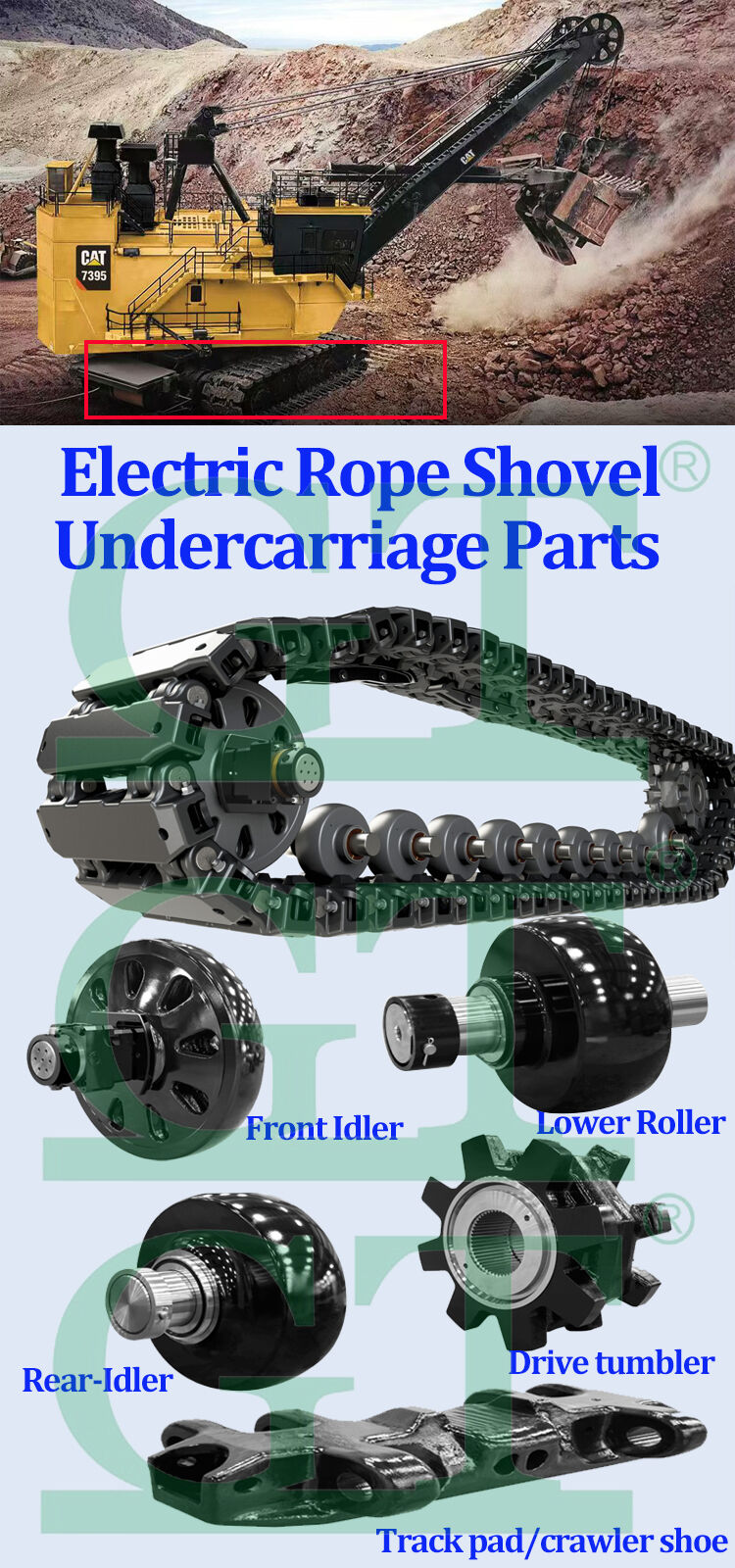
The Core Durability–Weight Trade-Off in Excavator Undercarriage Design
Why Higher Durability Typically Increases Mass: Metallurgical and Structural Constraints
Getting excavator undercarriages to last longer runs straight into problems with keeping them light enough for good performance because of basic material and design issues. When it comes down to metal science, making parts resist wear means going with heavier materials like those high carbon or boron treated steels, which naturally makes everything bulkier. Look at track links and rollers specifically they need much thicker sections and stronger shapes just to handle the constant stress that hits over 200 MPa in tough field conditions. We've seen time and again that if a manufacturer wants to double how long a track link lasts, they end up putting about 25 to 30 percent more steel into those impact areas. This creates a real dilemma for engineers wanting longer lasting components while still keeping weight down. Manufacturers constantly struggle to find the sweet spot between durability and weight without breaking something important along the way.
Field Evidence: Lifespan vs. Mass Index Data (2022–2024)
Operational data from a leading manufacturer (2022–2024) quantifies the durability–weight relationship across 120+ excavators. The study tracked undercarriage systems with varying mass indices—normalized weight metrics—in diverse conditions, from quarry operations to urban construction. Key findings revealed:
- Systems with 15% higher mass indices demonstrated 18–22% longer average service lives
- Extreme-duty applications showed the steepest durability gains per mass unit: 30% heavier systems lasted 40% longer
- Fuel efficiency decreased by 5–7% for every 10% mass increase, primarily due to higher rolling resistance
This evidence confirms that while weight penalties impact operational efficiency, they significantly extend component lifespan. Critically, diminishing returns emerge beyond a 25% mass increase—suggesting an optimal zone where durability improvements meaningfully justify the weight trade-off.
Material Innovation to Break the Trade-Off: High-Strength, Low-Density Alloys
The development of high strength but lightweight alloys marks a major breakthrough for excavator undercarriages stuck between durability and weight concerns. These new materials break away from old limitations through clever metalworking techniques like careful alloy mixing and temperature control during manufacturing. The result? Much better strength relative to their weight compared to what was possible before. Traditional steel options often meant adding tons of extra weight just to get minor gains in toughness. With today's alloys, engineers can keep things strong enough without making machines too heavy or bulky. This directly solves one of the biggest headaches facing undercarriage designers who need equipment that lasts but doesn't drag down performance.
Tensile Strength-to-Density Analysis: Track Links, Rollers, and Idlers Across Steel Grades
When looking at materials for undercarriage applications, the strength-to-density ratio remains one of the key indicators we consider. Take standard carbon steel Grade 250 as an example it typically reaches around 400 MPa in tensile strength but has a density of about 7.85 g per cubic centimeter, which gives us roughly a 51 MPa per g/cm³ ratio. Moving up the scale, high strength low alloy steels can push that number to approximately 550 MPa with very similar densities, resulting in a better 70 ratio figure. What really stands out though are these new boron alloyed versions that hit over 1000 MPa strength levels while keeping their density down to just 7.75 g/cm³, delivering ratios above 129. For actual track link designs, this means manufacturers can cut down on weight by about 22% without sacrificing impact resistance properties. The same benefits apply to rollers and idler components too lab testing has demonstrated that parts treated with boron technology can handle nearly 40 percent more cyclic loading stress before showing signs of deformation when compared against traditional HSLA steel alternatives.
Boron-Alloyed Steel in Practice: 2023 Field Trial Results on Wear Life and Weight Savings
In early 2023, a big name in Chinese heavy equipment manufacturing put these lab results to the test in real world conditions. They ran twelve excavators fitted with special boron alloy undercarriages through some of the toughest mining sites available for well over 5,000 operating hours straight. What they found was pretty impressive. On average, these machines weighed about 17 percent less than standard high strength low alloy (HSLA) models. And their parts lasted around 35% longer before needing replacement. Looking at specific wear metrics tells an even better story. The track links wore down at a rate of just 0.10 mm per 100 hours compared to 0.15 mm previously recorded. Roller flanges showed improvements too, with wear rates dropping by nearly a third. But what really caught attention was the fuel savings. Operators reported a 6.2% decrease in fuel consumption across the board. This shows how modern alloy technology isn't just making equipment tougher and lighter, it's actually cutting down on running expenses as well.
Operational Impact: How Undercarriage Weight Affects Fuel Efficiency and Mobility
Rolling Resistance, Inertia, and Fuel Penalty: Quantifying the Weight-Driven Efficiency Loss
When the undercarriage gets heavier, it actually increases rolling resistance because those heavy parts sink deeper into whatever surface they're moving on. The machine needs more engine power just to push through all that extra friction, which means burning more fuel for every mile covered. Studies indicate that if a tracked system gains about 5% in weight, fuel usage goes up around 1.8% when traveling normally. Heavier setups create more inertia too, so machines need additional power not only to speed up but also slow down or turn directions. This becomes especially problematic on muddy or rocky terrain where too much weight makes things sink even deeper, making movement harder and wasting even more energy. All these factors add up over months and years, driving up maintenance bills and overall operating expenses quite substantially.
Design Optimization Strategies That Preserve Durability While Minimizing Weight Penalty
Precision Weight Distribution and Track Tension Control to Reduce Localized Wear
Using advanced computer models, engineers can now put materials exactly where they need it most when dealing with stress points. This means cutting down on extra weight while keeping everything performing just as well. When combined with precise track tension adjustments that rely on live data feedback, we see better weight distribution across the system. This combination actually cuts down on those annoying wear spots by around 40%. Take heavy duty undercarriages for instance. When optimized through topology analysis, these components experience up to 25% less stress at critical points. The result? Longer lasting equipment without needing to add any extra bulk or weight.
Lifecycle Cost Perspective: When Heavier, Longer-Lasting Undercarriages Lower Total Cost of Ownership
Premium high strength alloys definitely cost about 20% more at first glance, but they actually change how we think about what matters most when it comes to durability versus weight. According to some research from last year, if an undercarriage lasts 10% longer, companies save around twelve grand each year on replacements for each machine. And this doesn't even consider all the other savings either. Longer time between services means less downtime overall, plus machines tend to burn less fuel too. Most operators find their money back within just eighteen months or so, which goes against what many people still believe - that lighter materials automatically mean cheaper operations in the long run.
| Optimization Technique | Durability Impact | Weight Reduction Benefit |
|---|---|---|
| Topology-Driven Design | +30% fatigue life | 12–18% mass reduction |
| Dynamic Tension Adjustment | -40% roller spalling | No added mass |
| High-Strength Material Swap | +50% impact resistance | 8–10% mass reduction |
FAQ
What are the main challenges in balancing durability and weight in excavator undercarriage design?
Durability usually increases weight due to the need for heavier materials to handle stress and wear, making it challenging to keep the undercarriage lightweight without sacrificing performance.
How does the new alloy technology improve excavator performance?
New alloy technologies offer high strength at lower densities, reducing the weight of components without compromising their durability, leading to better performance and reduced fuel consumption.
What impact does undercarriage weight have on excavator fuel efficiency?
Heavier undercarriages increase rolling resistance and inertia, leading to higher fuel consumption and increased operational costs.
How do design optimization strategies help reduce weight while maintaining durability?
By precise weight distribution and using high-strength materials, engineers reduce unnecessary mass while preserving or even enhancing the durability of the undercarriage.
Table of Contents
- The Core Durability–Weight Trade-Off in Excavator Undercarriage Design
- Material Innovation to Break the Trade-Off: High-Strength, Low-Density Alloys
- Operational Impact: How Undercarriage Weight Affects Fuel Efficiency and Mobility
- Design Optimization Strategies That Preserve Durability While Minimizing Weight Penalty
-
FAQ
- What are the main challenges in balancing durability and weight in excavator undercarriage design?
- How does the new alloy technology improve excavator performance?
- What impact does undercarriage weight have on excavator fuel efficiency?
- How do design optimization strategies help reduce weight while maintaining durability?

